


In the field of wire manufacturing, the choice of stranding machines is crucial for achieving high - quality wire products. As a supplier of the 50/3 Horizontal Pipe Stranding Machine, I often encounter inquiries about its suitability for fine wire stranding. In this blog, I will delve into this question, exploring the technical aspects, advantages, and limitations of using a 50/3 Horizontal Pipe Stranding Machine for fine wire stranding.
Understanding the 50/3 Horizontal Pipe Stranding Machine
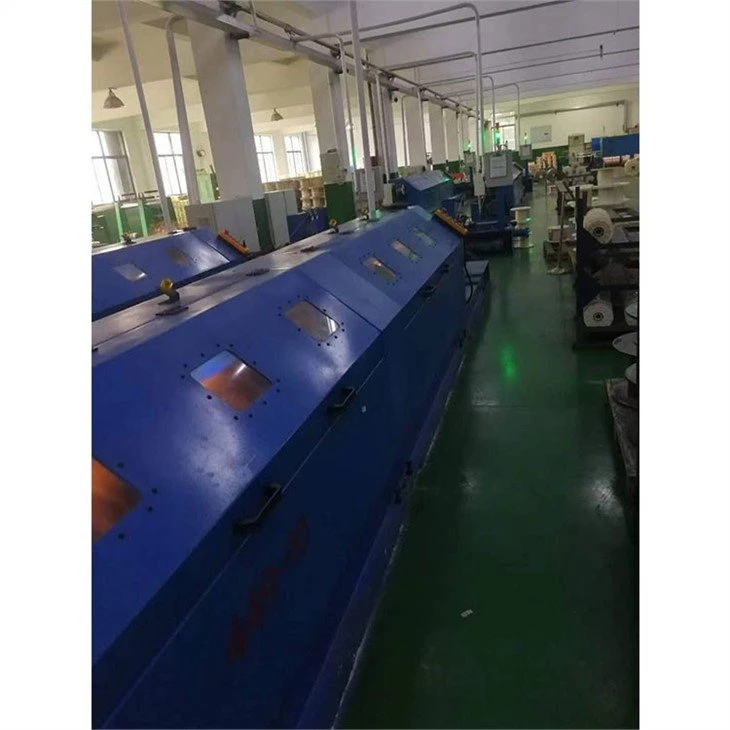
The 50/3 Horizontal Pipe Stranding Machine is a specialized piece of equipment designed for stranding multiple wires together. The "50" typically represents the maximum number of wire carriers that the machine can accommodate, while the "3" indicates the number of stranding layers. This machine operates in a horizontal configuration, which offers certain advantages in terms of space utilization and ease of operation compared to vertical stranding machines.
The basic principle of the horizontal pipe stranding machine involves the rotation of the wire carriers around a central axis while the wires are fed through a pipe. As the carriers rotate, the wires are twisted together to form a stranded wire. The speed and precision of this process are controlled by various mechanical and electrical components, ensuring that the stranded wire meets the required specifications.
Technical Requirements for Fine Wire Stranding
Fine wires, generally defined as wires with a small diameter (usually less than 1mm), have specific requirements when it comes to stranding. Firstly, the stranding process must be gentle to avoid breaking the fine wires. The tension applied to the wires during stranding needs to be carefully controlled to prevent excessive stress that could lead to wire breakage. Secondly, the precision of the stranding pitch is crucial. A consistent stranding pitch ensures the uniformity of the electrical and mechanical properties of the stranded wire.

In addition, the surface quality of the fine wires must be maintained during stranding. Any scratches or abrasions on the wire surface can affect the performance of the final product, especially in applications where high - quality insulation or low electrical resistance is required.
Can the 50/3 Horizontal Pipe Stranding Machine Meet the Requirements?
Advantages
- Precision Control: Modern 50/3 Horizontal Pipe Stranding Machines are equipped with advanced control systems that allow for precise adjustment of the stranding speed, tension, and pitch. This precision control is essential for fine wire stranding, as it enables the operator to set the optimal parameters to ensure the integrity of the fine wires. For example, the tension control system can be adjusted to apply just the right amount of force to the wires, preventing breakage while still achieving a tight and uniform strand.
- Space - Saving Design: The horizontal configuration of the machine takes up less floor space compared to vertical stranding machines. This is particularly beneficial for manufacturers with limited production space. Moreover, the horizontal design makes it easier to access the wire carriers and the stranding area, facilitating maintenance and wire feeding operations.
- Versatility: The 50/3 Horizontal Pipe Stranding Machine can handle a variety of wire materials, including copper, aluminum, and various alloy wires. This versatility allows manufacturers to use the machine for different types of fine wire stranding applications, such as in the production of electronic cables, automotive wiring, and telecommunications cables.
Limitations
- Wire Diameter Range: Although the 50/3 Horizontal Pipe Stranding Machine can handle a relatively wide range of wire diameters, there may be limitations when it comes to extremely fine wires. The minimum wire diameter that the machine can effectively strand depends on the design of the wire carriers, the tension control system, and the stranding speed. In some cases, very fine wires may require a more specialized stranding machine with higher precision components.
- Stranding Capacity: The number of wire carriers (50 in the case of the 50/3 machine) may limit the number of fine wires that can be stranded together at once. For applications that require a large number of fine wires to be stranded in a single operation, a machine with a higher number of carriers, such as the 200/3 Horizontal Pipe Stranding Machine, may be more suitable.
Case Studies
To illustrate the practical application of the 50/3 Horizontal Pipe Stranding Machine in fine wire stranding, let's consider a case study in the production of automotive sensor cables. These cables often use fine wires to transmit electrical signals with high precision.
A manufacturer was using a 50/3 Horizontal Pipe Stranding Machine to strand fine copper wires with a diameter of 0.2mm. By carefully adjusting the tension control system and the stranding speed, the manufacturer was able to achieve a consistent stranding pitch and a high - quality stranded wire. The gentle stranding process ensured that the fine wires remained intact, and the surface quality of the stranded wire met the strict requirements of the automotive industry.
However, in another case where a large number of fine wires (more than 50) needed to be stranded for a high - density telecommunications cable, the 50/3 machine reached its capacity limit. The manufacturer then switched to a 200/3 Horizontal Pipe Stranding Machine to meet the production requirements.
Other Considerations for Fine Wire Stranding
When using a 50/3 Horizontal Pipe Stranding Machine for fine wire stranding, there are several other factors to consider. Firstly, the quality of the wire carriers is important. High - quality carriers with smooth surfaces and precise bearings can reduce friction and ensure the smooth movement of the fine wires. Secondly, the lubrication system of the machine needs to be properly maintained. Adequate lubrication helps to reduce the wear and tear on the wires and the machine components, extending the service life of both the wires and the machine.
The environment in which the stranding machine operates also plays a role. A clean and dust - free environment is beneficial for fine wire stranding, as dust particles can cause scratches on the wire surface or interfere with the stranding process.
Conclusion
In conclusion, a 50/3 Horizontal Pipe Stranding Machine can be used for fine wire stranding in many cases. Its precision control, space - saving design, and versatility make it a viable option for manufacturers looking to produce high - quality stranded fine wires. However, it is important to be aware of its limitations, such as the wire diameter range and stranding capacity.
If you are considering using a 50/3 Horizontal Pipe Stranding Machine for fine wire stranding, or if you have specific requirements for your wire stranding needs, we encourage you to contact us for further discussion. Our team of experts can provide you with detailed information and guidance on choosing the most suitable stranding machine for your application. We also offer a range of related products, such as the 50/6 Horizontal Pipe Stranding Machine and the 100/6 Horizontal Pipe Stranding Machine, which may better meet your specific requirements.
References
- "Handbook of Wire and Cable Engineering", Second Edition, edited by Peter J. Fleming
- "Stranding Technology for Electrical Wires and Cables", published by the Institute of Electrical and Electronics Engineers (IEEE)