


As a supplier of the 200/6 Horizontal Pipe Stranding Machine, I often receive inquiries about its suitability for fine - wire stranding. In this blog, I will delve into the technical aspects, advantages, and limitations of using the 200/6 Horizontal Pipe Stranding Machine for fine - wire stranding.
Technical Specifications of the 200/6 Horizontal Pipe Stranding Machine
The 200/6 Horizontal Pipe Stranding Machine is a remarkable piece of equipment designed for stranding multiple wires together. The "200" in its name typically refers to the maximum capacity of the machine in terms of the outer diameter of the stranded cable it can produce, usually measured in millimeters. The "6" indicates the number of pay - off positions, meaning it can handle up to six wires simultaneously during the stranding process.
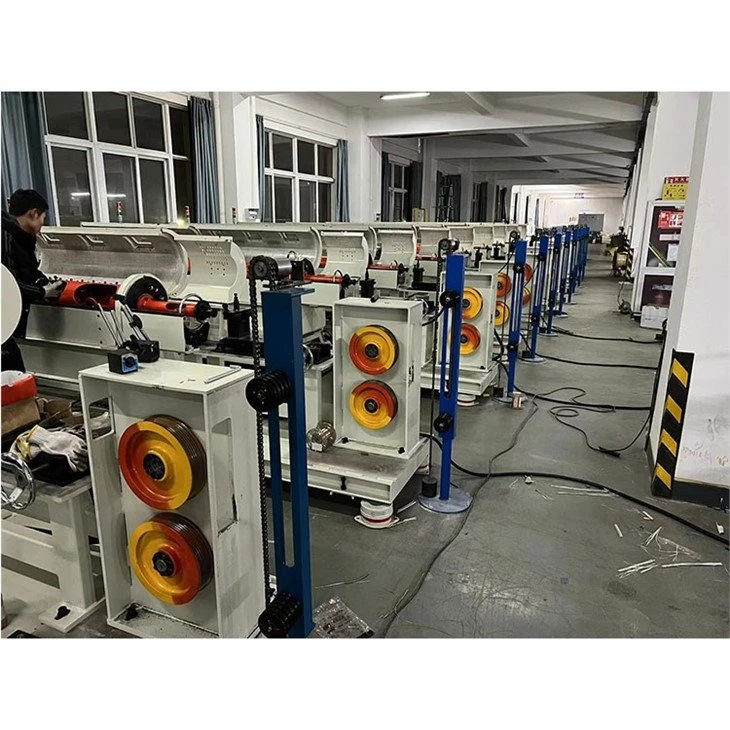
The machine operates on a horizontal axis, which provides several benefits. The horizontal design allows for better control of the wire tension during stranding. It also makes it easier to load and unload the wire spools, as well as to monitor the stranding process. The stranding mechanism is driven by a powerful motor, which ensures a consistent and stable stranding speed.
Characteristics of Fine - Wire Stranding
Fine - wire stranding involves the twisting of very thin wires, usually with a diameter of less than 1mm. These fine wires are often used in applications where flexibility, high conductivity, and low weight are required, such as in electronic devices, medical equipment, and aerospace components.

The main challenges in fine - wire stranding are maintaining uniform tension across all the wires, preventing wire breakage, and achieving a high - quality stranded structure. Since fine wires are more fragile than thicker ones, any irregularity in tension or excessive stress can lead to wire breakage, which can disrupt the production process and reduce the quality of the final product.
Can the 200/6 Horizontal Pipe Stranding Machine be Used for Fine - Wire Stranding?
Advantages
- Tension Control: The 200/6 Horizontal Pipe Stranding Machine is equipped with advanced tension control systems. These systems can be adjusted to maintain a consistent and appropriate tension on each of the fine wires during the stranding process. By precisely controlling the tension, the risk of wire breakage is significantly reduced, ensuring a smooth and continuous stranding operation.
- Multi - Wire Handling: With its six pay - off positions, the machine can handle multiple fine wires at once. This allows for the efficient production of multi - core fine - wire cables. For example, in the production of a six - core fine - wire cable used in a medical device, the 200/6 machine can strand all six wires simultaneously, saving time and increasing productivity.
- Horizontal Design: The horizontal layout of the machine provides a stable platform for fine - wire stranding. It allows for easy access to the wire spools and the stranding area, making it convenient for operators to monitor the process and make any necessary adjustments. This ease of access is crucial when working with fine wires, as it enables quick intervention in case of any issues.
Limitations
- Wire Diameter Range: Although the 200/6 Horizontal Pipe Stranding Machine is versatile, there is a limit to the diameter of the wires it can handle. If the wires are too thin, the machine may not be able to provide the necessary precision in tension control. For extremely fine wires, say less than 0.1mm in diameter, the machine may require some modifications or additional accessories to ensure optimal performance.
- Speed and Precision: Fine - wire stranding often requires a slower and more precise stranding speed compared to thicker wires. While the 200/6 machine can adjust its speed, there may be a trade - off between speed and precision. At higher speeds, it may be more difficult to maintain the required tension and precision for fine - wire stranding.
Comparison with Other Horizontal Pipe Stranding Machines
There are other horizontal pipe stranding machines available in the market, such as the 80/3 Horizontal Pipe Stranding Machine, 100/6 Horizontal Pipe Stranding Machine, and 120/3 Horizontal Pipe Stranding Machine.
The 80/3 machine has a smaller capacity, with a maximum outer diameter of 80mm and three pay - off positions. It may be more suitable for smaller - scale fine - wire stranding projects or for applications where only a few fine wires need to be stranded. The 100/6 machine is similar to the 200/6 in terms of the number of pay - off positions but has a smaller maximum capacity. It can also be used for fine - wire stranding, but its performance may be limited compared to the 200/6 machine in terms of the overall size of the stranded cable that can be produced. The 120/3 machine has a different pay - off configuration and is designed for specific applications.
Considerations for Using the 200/6 Machine for Fine - Wire Stranding
- Wire Selection: When using the 200/6 Horizontal Pipe Stranding Machine for fine - wire stranding, it is important to select the right type of wire. The wire should have good flexibility, high conductivity, and be able to withstand the tension and stress during the stranding process. Different materials, such as copper, aluminum, and silver - plated copper, have different properties, and the choice of material depends on the specific application requirements.
- Machine Setup: Proper machine setup is crucial for successful fine - wire stranding. This includes adjusting the tension control settings, setting the appropriate stranding speed, and ensuring that the wire spools are properly loaded. It is also important to clean and lubricate the machine regularly to prevent any mechanical issues that could affect the stranding process.
- Quality Control: Implementing a strict quality control system is essential when using the machine for fine - wire stranding. This includes inspecting the stranded cables for any signs of wire breakage, uneven stranding, or other defects. Regular testing of the electrical properties of the stranded cables, such as conductivity and insulation resistance, can also help to ensure the quality of the final product.
Conclusion
In conclusion, the 200/6 Horizontal Pipe Stranding Machine can be used for fine - wire stranding, but it has its advantages and limitations. The machine's horizontal design, tension control capabilities, and multi - wire handling capacity make it a viable option for fine - wire stranding. However, due to the fragility of fine wires, some considerations need to be taken into account, such as wire selection, machine setup, and quality control.
If you are interested in using the 200/6 Horizontal Pipe Stranding Machine for fine - wire stranding or have any questions about our products, please feel free to contact us for further discussion and procurement negotiations. We are committed to providing high - quality stranding solutions to meet your specific needs.
References
- Groover, M. P. (2010). Principles of Modern Manufacturing: Materials, Processes, and Systems. Wiley.
- EPRI (Electric Power Research Institute). (2015). Electrical Transmission and Distribution Reference Book. EPRI.