


Hey there! I'm a supplier of the 80/3 Horizontal Pipe Stranding Machine. Today, I wanna dig into the tension control method of this awesome piece of equipment.
First things first, why is tension control so crucial for the 80/3 Horizontal Pipe Stranding Machine? Well, proper tension control ensures that the strands are evenly and tightly wound together. If the tension is too high, it can cause the strands to break, leading to production interruptions and wasted materials. On the other hand, if the tension is too low, the strands won't be compacted well, which can result in a loose and unstable cable or wire product. So, getting the tension right is key to making high - quality products.
Now, let's look at some of the popular tension control methods for the 80/3 Horizontal Pipe Stranding Machine.
1. Mechanical Tension Control
This is one of the oldest and most straightforward methods. In a mechanical tension control system, we usually use brakes and clutches. The brake is applied to the pay - off spools. By adjusting the braking force, we can control the tension of the strands as they are unwound from the spools.
For example, a simple friction brake can be installed on the shaft of the pay - off spool. The more pressure we apply to the brake pads, the higher the resistance the spool experiences when rotating. This increased resistance results in higher tension on the strand. However, mechanical tension control has its limitations. It can be affected by factors like wear and tear of the brake components. Over time, the brake pads may wear out, and the braking force will decrease, leading to inconsistent tension.
2. Pneumatic Tension Control
Pneumatic tension control uses compressed air to adjust the tension. We install pneumatic brakes or clutches on the pay - off spools. The air pressure can be easily adjusted to control the braking or clutching force, which in turn controls the tension of the strands.
The advantage of pneumatic tension control is its quick response. We can make rapid adjustments to the tension by simply changing the air pressure. It's also relatively clean compared to some other methods. However, it requires a reliable air supply system. If there's a problem with the air compressor or the air lines, it can affect the tension control.
3. Electronic Tension Control
This is a more advanced method that uses sensors and controllers. There are tension sensors installed on the machine, which can detect the actual tension of the strands in real - time. The sensor sends the tension data to a controller. The controller then compares the actual tension with the set tension value. If there's a difference, the controller will adjust the speed of the pay - off spools or the take - up reel to correct the tension.
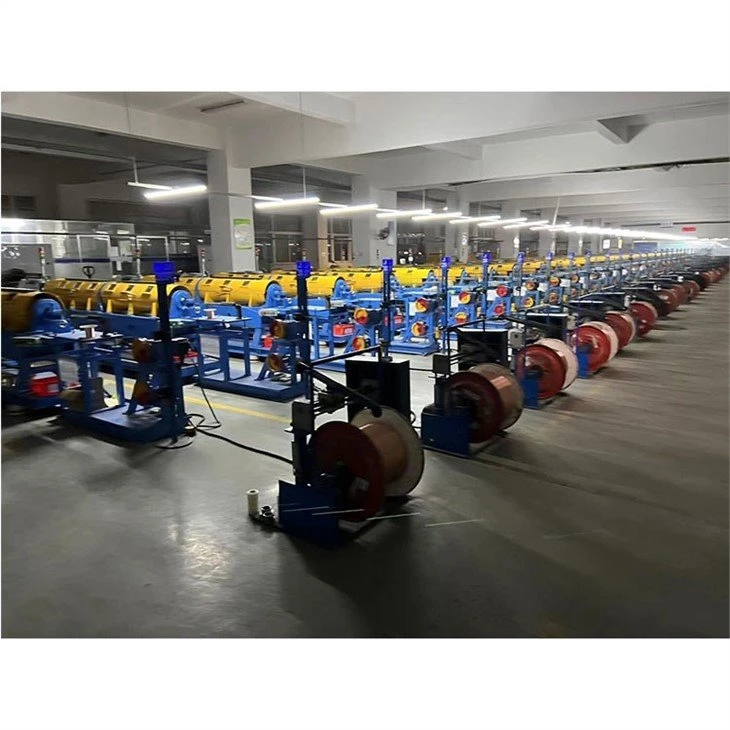

Electronic tension control offers very precise and stable tension regulation. It can adapt to different production speeds and material properties. For instance, if we're using a different type of wire with a different elasticity, the electronic system can adjust the tension automatically to ensure consistent quality. But it is also more expensive to install and maintain, as it involves sophisticated electronics and software.
Comparison of the Methods
Each tension control method has its pros and cons. Mechanical control is simple and low - cost, but it lacks precision and long - term stability. Pneumatic control offers a good balance between simplicity and performance, but it depends on a proper air supply. Electronic control is the most accurate and adaptable, but it comes with a higher price tag.
When choosing a tension control method for the 80/3 Horizontal Pipe Stranding Machine, we need to consider several factors. The type of product we're producing is important. For example, if we're making high - precision cables, electronic tension control might be the best choice. The production speed is also a factor. Higher production speeds usually require a more responsive tension control system, like pneumatic or electronic.
And speaking of our products, we also offer other models of horizontal pipe stranding machines, such as the 165/3 Horizontal Pipe Stranding Machine, the 50/6 Horizontal Pipe Stranding Machine, and the 165/6 Horizontal Pipe Stranding Machine. These machines also come with different tension control options to meet your specific needs.
If you're in the market for a high - quality horizontal pipe stranding machine, whether it's the 80/3 or one of our other models, I'd love to talk to you. The right choice of tension control method can greatly improve your production efficiency and product quality. So, don't hesitate to reach out for more information and start a discussion about what will work best for your business.
References
- "Handbook of Cable Manufacturing Technology"
- Industry reports on wire and cable production machinery