


The stranding process is a crucial step in the manufacturing of cables and wires, where multiple conductors are twisted together to form a single, cohesive unit. A Double Twist Stranding Machine is widely used in this process due to its efficiency and ability to produce high - quality stranded products. One of the key factors that significantly affects the stranding quality is the wire tension. In this blog, as a Double Twist Stranding Machine supplier, I will delve into the impact of wire tension on the stranding quality and why it matters in the production process.
Understanding Wire Tension in a Double Twist Stranding Machine
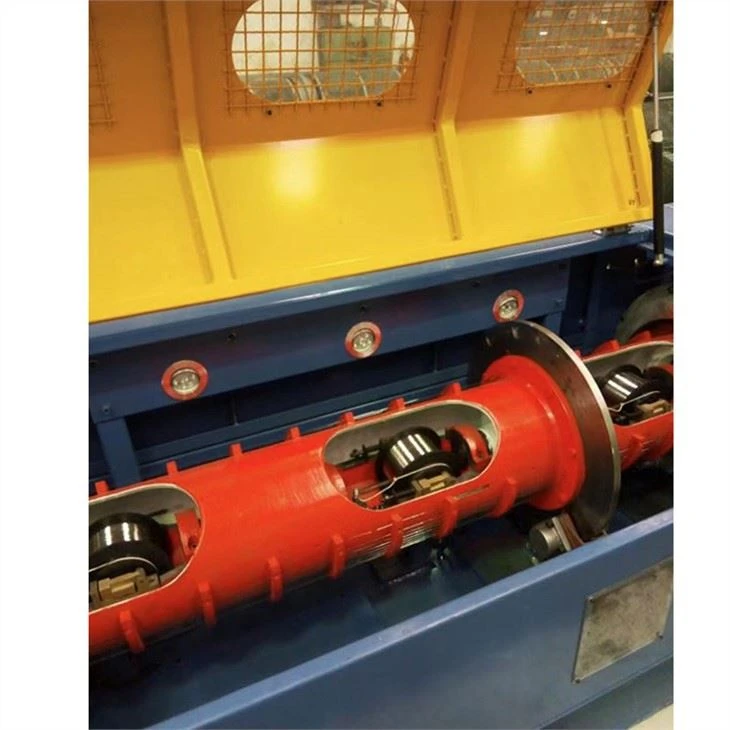
Wire tension refers to the force applied to the individual wires during the stranding process. In a Double Twist Stranding Machine, the wires are fed into the machine at a specific tension, which is maintained throughout the twisting operation. This tension is carefully controlled to ensure that the wires are laid evenly and consistently around the central core or each other.
There are several factors that can influence wire tension, including the speed of the machine, the diameter and material of the wires, and the type of stranding pattern. For example, if the machine is running at a high speed, the wires may experience more resistance, which can lead to an increase in tension. Similarly, wires with larger diameters or made of stiffer materials may require higher tension to be stranded properly.
Impact of Wire Tension on Stranding Quality
1. Uniformity of Stranding
One of the most important aspects of stranding quality is the uniformity of the stranded product. Proper wire tension ensures that the wires are laid at a consistent pitch and angle around the core. When the tension is too low, the wires may not be held tightly enough, resulting in a loose and uneven stranding pattern. This can lead to problems such as gaps between the wires, which can reduce the electrical conductivity and mechanical strength of the cable.
On the other hand, if the tension is too high, the wires may be stretched or deformed, causing them to break or damage during the stranding process. This can also result in an uneven stranding pattern, as the broken wires may not be laid correctly around the core. Therefore, maintaining the right wire tension is essential for achieving a uniform and high - quality stranded product.

2. Mechanical Strength
The mechanical strength of a stranded cable is directly related to the way the wires are stranded together. When the wire tension is properly adjusted, the wires are tightly bound, which increases the overall strength of the cable. This is important because cables are often subjected to various mechanical stresses during installation and use, such as bending, pulling, and twisting.
If the stranding is loose due to low wire tension, the cable may be more prone to damage from these mechanical stresses. For example, the wires may separate or break under tension, which can lead to a loss of electrical conductivity and even complete failure of the cable. In contrast, a cable with a tight and uniform stranding pattern, achieved through proper wire tension, can withstand higher mechanical stresses and have a longer service life.
3. Electrical Performance
The electrical performance of a cable is also affected by the wire tension during stranding. A uniform stranding pattern ensures that the electrical resistance is consistent throughout the cable. When the tension is not properly controlled, the uneven distribution of wires can lead to variations in electrical resistance, which can cause signal loss, interference, and other electrical problems.
For example, in high - frequency applications, such as telecommunications and data transmission, even small variations in electrical resistance can have a significant impact on the performance of the cable. By maintaining the correct wire tension, we can ensure that the cable has a stable and reliable electrical performance.
Controlling Wire Tension in a Double Twist Stranding Machine
As a Double Twist Stranding Machine supplier, we understand the importance of providing our customers with machines that can accurately control wire tension. Our machines are equipped with advanced tension control systems that allow operators to adjust the tension according to the specific requirements of the stranding process.
These tension control systems use sensors to monitor the tension of the wires in real - time and make automatic adjustments as needed. This ensures that the wire tension remains constant throughout the stranding process, regardless of changes in machine speed, wire diameter, or other factors.
In addition to the tension control systems, our machines also offer a range of features that can help improve the stranding quality. For example, we have machines with adjustable stranding pitch and angle, which allow operators to customize the stranding pattern according to the specific needs of the application.
Our Product Range
We offer a wide range of Double Twist Stranding Machines, including the 200/9 Horizontal Pipe Stranding Machine, the 100/3 Horizontal Pipe Stranding Machine, and the 50/6 Horizontal Pipe Stranding Machine. These machines are designed to meet the diverse needs of our customers, from small - scale production to large - scale industrial applications.
Each of our machines is built with high - quality components and advanced technology to ensure reliable performance and long - term durability. Whether you are looking for a machine for stranded copper cables, aluminum cables, or other types of wires, we have the right solution for you.
Conclusion
In conclusion, wire tension plays a critical role in the stranding quality of a Double Twist Stranding Machine. It affects the uniformity of stranding, mechanical strength, and electrical performance of the stranded cable. As a Double Twist Stranding Machine supplier, we are committed to providing our customers with machines that can accurately control wire tension and produce high - quality stranded products.
If you are in the market for a Double Twist Stranding Machine or have any questions about wire tension and stranding quality, we encourage you to contact us. Our team of experts is ready to assist you in selecting the right machine for your specific needs and provide you with the support and guidance you need to achieve the best results in your stranding process.
References
- Groover, M. P. (2010). Fundamentals of Modern Manufacturing: Materials, Processes, and Systems. Wiley.
- Radel, R. M., & Flanagan, J. T. (2013). Polymer Science and Technology. Wiley.
- Carusone, T., Johns, D., & Martin, K. (2011). Analog Integrated Circuit Design. Wiley.