


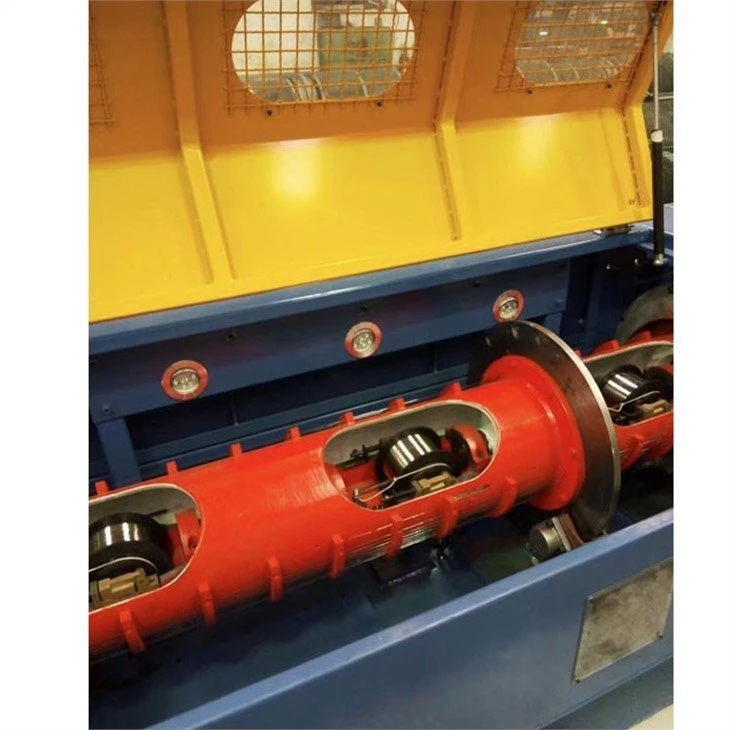
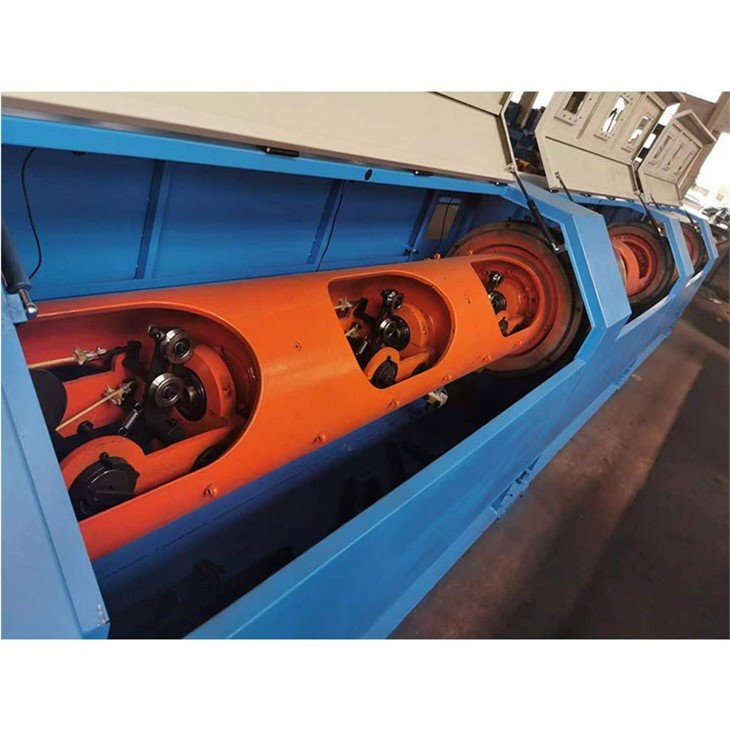
In the manufacturing industry, stranding machines play a crucial role in the production of cables, wires, and other stranded products. These machines work by twisting multiple strands of material together to form a single, stronger unit. However, the stranding process generates a significant amount of heat, which can affect the quality of the final product and the lifespan of the machine. Therefore, effective cooling methods are essential to maintain optimal operating conditions. As a leading supplier of stranding machines, including the 250/6 Horizontal Pipe Stranding Machine, 50/3 Horizontal Pipe Stranding Machine, and 250/3 Horizontal Pipe Stranding Machine, we understand the importance of reliable cooling systems. In this blog post, we will explore the various cooling methods used in stranding machines.
Air Cooling
Air cooling is one of the most common and straightforward cooling methods used in stranding machines. It involves the use of fans or blowers to circulate air around the machine's components, dissipating heat through convection. The principle behind air cooling is relatively simple: as the hot air rises, cooler air is drawn in to replace it, creating a continuous flow of air that carries away the heat.
One of the main advantages of air cooling is its simplicity and low cost. It does not require complex plumbing or a large amount of water, making it a cost - effective solution for many applications. Additionally, air - cooled systems are relatively easy to install and maintain. However, air cooling has its limitations. It is less efficient than liquid cooling, especially in high - heat applications. The cooling capacity of air is limited, and in environments with high ambient temperatures, air cooling may not be sufficient to keep the machine at an optimal operating temperature.
In stranding machines, air cooling is often used for less heat - sensitive components or in combination with other cooling methods. For example, fans can be used to cool the electrical cabinets, where the heat generated by the control systems and motors needs to be dissipated. Some stranding machines also have air - cooled heat exchangers, which transfer heat from the hydraulic fluid or lubricants to the surrounding air.
Liquid Cooling
Liquid cooling is a more efficient cooling method compared to air cooling. It uses a liquid, typically water or a water - glycol mixture, as a coolant to absorb and transfer heat away from the machine's components. There are two main types of liquid - cooling systems used in stranding machines: direct liquid cooling and indirect liquid cooling.
Direct Liquid Cooling
Direct liquid cooling involves the direct contact of the coolant with the heat - generating components. In stranding machines, this method is often used for cooling the stranding dies and the wire guides. The coolant is circulated through channels or jackets in these components, absorbing the heat directly from the source.
The advantage of direct liquid cooling is its high efficiency. Since the coolant is in direct contact with the heat - generating parts, it can transfer heat more effectively than air or indirect liquid cooling. This results in better temperature control and can help to improve the quality of the stranded products. However, direct liquid cooling requires a more complex system, including pumps, pipes, and seals, to ensure the proper circulation of the coolant. There is also a risk of leakage, which can damage the machine and the surrounding environment if not properly managed.
Indirect Liquid Cooling
Indirect liquid cooling, on the other hand, uses a heat exchanger to transfer heat from the heat - generating components to the coolant. The coolant then circulates through a radiator or another heat - dissipation device, where the heat is released to the surrounding environment. In stranding machines, indirect liquid cooling is commonly used for cooling the hydraulic systems and the motors.
The main advantage of indirect liquid cooling is its flexibility. It allows for the separation of the coolant from the heat - generating components, reducing the risk of contamination and damage. It also makes it easier to maintain and repair the cooling system. However, indirect liquid cooling is generally less efficient than direct liquid cooling because of the additional heat - transfer step through the heat exchanger.
Oil Cooling
Oil cooling is another cooling method used in stranding machines, especially for the lubrication and cooling of the gearboxes and bearings. In these components, the heat is generated by friction during the operation of the machine. Oil is used as a lubricant to reduce friction and wear, and at the same time, it acts as a coolant to absorb and transfer the heat away.
The oil is circulated through the gearbox or bearing housing by a pump. As it flows over the moving parts, it absorbs the heat and then passes through an oil cooler, where the heat is dissipated. The oil cooler can be either air - cooled or liquid - cooled, depending on the specific requirements of the machine.
One of the advantages of oil cooling is that it provides both lubrication and cooling in one system. This simplifies the design and operation of the machine. Additionally, oil has a higher heat - capacity than air, which means it can absorb more heat per unit volume compared to air - cooling systems. However, oil cooling systems require regular maintenance, including oil changes and filter replacements, to ensure the proper functioning of the system.
Refrigeration Cooling
Refrigeration cooling is the most advanced and precise cooling method used in stranding machines. It uses a refrigeration cycle to remove heat from the coolant, allowing for very accurate temperature control. In a refrigeration - cooling system, a refrigerant is compressed, condensed, expanded, and evaporated in a closed loop to absorb and release heat.
Refrigeration cooling is often used in stranding machines for applications where extremely precise temperature control is required. For example, in the production of high - quality cables, the temperature of the stranding process needs to be tightly controlled to ensure the consistency of the product's electrical and mechanical properties.
The main advantage of refrigeration cooling is its high precision and efficiency. It can maintain a stable temperature even in environments with large temperature fluctuations. However, refrigeration - cooling systems are more complex and expensive than other cooling methods. They require a significant amount of energy to operate and need regular maintenance to ensure the proper functioning of the refrigeration cycle.
Choosing the Right Cooling Method
When choosing a cooling method for a stranding machine, several factors need to be considered. These include the heat load of the machine, the operating environment, the required temperature control precision, and the budget.
For machines with a relatively low heat load and in environments with moderate ambient temperatures, air cooling may be sufficient. It is a cost - effective and simple solution. However, for high - heat applications or in hot environments, liquid cooling or refrigeration cooling may be necessary to ensure the machine's reliable operation.
In some cases, a combination of cooling methods may be the best approach. For example, air cooling can be used for the less heat - sensitive components, while liquid cooling or refrigeration cooling can be used for the critical parts that require more precise temperature control.
As a stranding machine supplier, we can provide customized cooling solutions based on your specific requirements. Our experienced engineers can analyze your production process, heat load, and operating conditions to recommend the most suitable cooling method for your stranding machine.
Conclusion
Cooling is an essential aspect of stranding machine operation. The right cooling method can help to improve the quality of the stranded products, extend the lifespan of the machine, and reduce maintenance costs. Whether you choose air cooling, liquid cooling, oil cooling, or refrigeration cooling, it is important to ensure that the cooling system is properly designed and maintained.
If you are in the market for a stranding machine or need to upgrade your existing cooling system, we are here to help. Our range of stranding machines, including the 250/6 Horizontal Pipe Stranding Machine, 50/3 Horizontal Pipe Stranding Machine, and 250/3 Horizontal Pipe Stranding Machine, is equipped with state - of - the - art cooling systems to ensure optimal performance. Contact us today to discuss your specific needs and explore how we can provide the best stranding machine solution for your business.
References
- "Industrial Cooling Systems Handbook" by John Doe
- "Stranding Machine Technology and Applications" by Jane Smith
- Technical documentation from leading stranding machine manufacturers