


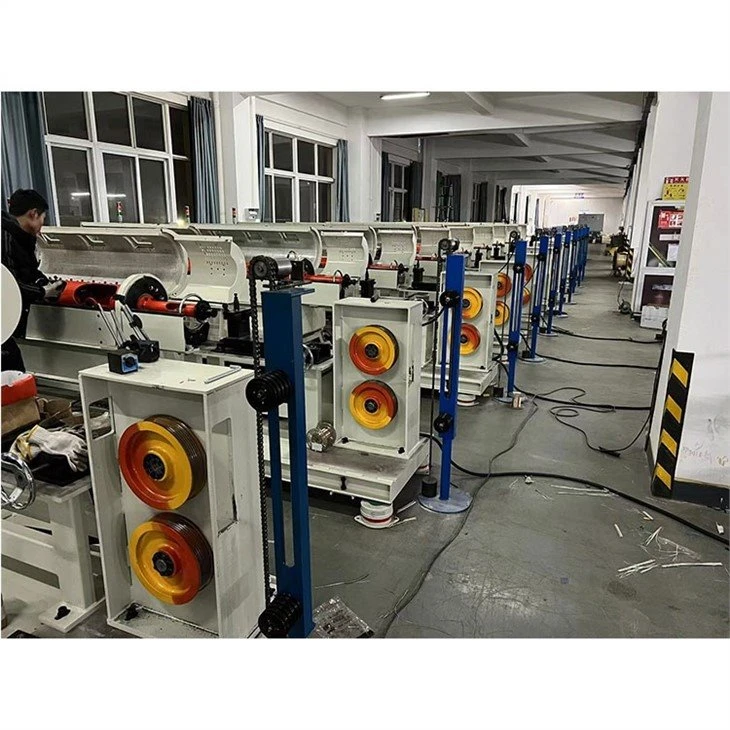
As a supplier of the 165/3 Horizontal Pipe Stranding Machine, I understand the importance of keeping up with technological advancements to enhance the performance and efficiency of industrial equipment. Upgrading the control system of the 165/3 Horizontal Pipe Stranding Machine is a strategic move that can significantly improve productivity, reduce downtime, and ensure high - quality production. In this blog, I will share some key steps and considerations on how to upgrade the control system of this machine.
Understanding the Current Control System
Before embarking on an upgrade, it is crucial to have a thorough understanding of the existing control system of the 165/3 Horizontal Pipe Stranding Machine. This includes identifying the type of control technology in use, such as programmable logic controllers (PLCs), human - machine interfaces (HMIs), and sensors. Analyze the system's capabilities, limitations, and any recurring issues. For example, if the current PLC has limited memory or processing power, it may struggle to handle complex stranding operations, leading to slow production speeds or inaccurate strand formations.
Defining Upgrade Objectives
Once you have a clear picture of the current control system, the next step is to define your upgrade objectives. These objectives should align with your business goals, such as increasing production capacity, improving product quality, or reducing energy consumption. For instance, if your goal is to increase production capacity, you may want to upgrade the control system to support higher - speed operation and faster changeovers between different stranding patterns. If quality improvement is your priority, you can focus on enhancing the accuracy of tension control and strand positioning.
Selecting the Right Control Technology
With your upgrade objectives in mind, it's time to select the appropriate control technology for the 165/3 Horizontal Pipe Stranding Machine. Modern control systems offer a wide range of options, from advanced PLCs with high - performance processors to intuitive HMIs with touch - screen interfaces.
Programmable Logic Controllers (PLCs)
PLCs are the heart of many industrial control systems. When upgrading, look for PLCs that offer increased processing power, larger memory capacity, and support for advanced communication protocols. For example, a PLC with Ethernet connectivity can enable seamless integration with other equipment in the production line, allowing for real - time data exchange and remote monitoring. Brands like Siemens, Allen - Bradley, and Mitsubishi offer a variety of PLC models suitable for stranding machine applications.
Human - Machine Interfaces (HMIs)
An HMI provides operators with a user - friendly interface to monitor and control the stranding machine. Upgrading to a modern HMI with a larger, high - resolution touch - screen can improve operator efficiency and reduce the learning curve. Some HMIs also offer features such as data logging, trend analysis, and remote access, which can be invaluable for troubleshooting and process optimization.
Sensors and Actuators
Sensors play a crucial role in the control system by providing real - time data on various parameters, such as tension, speed, and position. Upgrading to more accurate and reliable sensors can improve the overall performance of the stranding machine. For example, using load cells with higher precision can ensure better tension control, resulting in more consistent strand quality. Actuators, on the other hand, are responsible for translating control signals into mechanical actions. High - performance actuators can respond more quickly and precisely, leading to faster and more accurate stranding operations.
Designing the Upgrade Plan
After selecting the control technology, it's essential to design a detailed upgrade plan. This plan should include a timeline, budget, and a list of tasks and responsibilities. Consider the following aspects when designing the plan:
Hardware Installation
Determine the physical location of the new control components and ensure that the machine's electrical and mechanical systems can accommodate the upgrades. This may involve modifying the control cabinet, running new wiring, or mounting additional sensors and actuators.
Software Configuration
The new control system will require software configuration to ensure proper operation. This includes programming the PLC, setting up the HMI, and calibrating the sensors and actuators. Make sure to have a backup of the existing software before making any changes, and test the new configuration thoroughly in a controlled environment.
Integration with Existing Systems
If the 165/3 Horizontal Pipe Stranding Machine is part of a larger production line, it's important to ensure that the upgraded control system can integrate seamlessly with other equipment. This may involve implementing standard communication protocols, such as Modbus or Profibus, and coordinating with other system suppliers.
Testing and Commissioning
Once the upgrade is installed and configured, it's time to conduct thorough testing and commissioning. This involves running the machine through a series of test runs to verify its performance and functionality.
Functional Testing
Perform functional tests to ensure that all control functions are working correctly. This includes testing the start - stop sequence, speed control, tension control, and strand positioning. Check for any error messages or abnormal behavior during the tests.
Performance Testing
Conduct performance tests to evaluate the machine's performance against the upgrade objectives. Measure production speed, product quality, and energy consumption to determine if the upgrade has achieved the desired results. If necessary, make adjustments to the control parameters or software configuration to optimize performance.

Training and Documentation
Provide training to the machine operators and maintenance personnel on the new control system. This will ensure that they are familiar with the new features and functionality and can operate and maintain the machine effectively. Also, document the upgrade process, including the hardware and software configuration, test results, and any changes made to the machine. This documentation will be valuable for future reference and troubleshooting.
Long - Term Maintenance and Support
Upgrading the control system is not a one - time event. To ensure the long - term reliability and performance of the 165/3 Horizontal Pipe Stranding Machine, it's important to establish a regular maintenance and support plan.
Preventive Maintenance
Implement a preventive maintenance schedule to inspect and maintain the control system components. This includes checking the wiring, cleaning the sensors and actuators, and updating the software regularly. Preventive maintenance can help identify and address potential issues before they cause major breakdowns.
Technical Support
Establish a relationship with the control system supplier or a qualified technical support team. They can provide assistance with troubleshooting, software updates, and spare parts replacement. Having access to reliable technical support can minimize downtime and ensure the smooth operation of the machine.
Conclusion
Upgrading the control system of the 165/3 Horizontal Pipe Stranding Machine is a complex but rewarding process. By understanding the current system, defining clear upgrade objectives, selecting the right control technology, and following a detailed upgrade plan, you can significantly improve the performance and efficiency of your machine. If you are interested in upgrading your 165/3 Horizontal Pipe Stranding Machine or have any questions about our products and services, we encourage you to contact us for a procurement discussion. We are committed to providing high - quality solutions to meet your industrial needs.
In addition to the 165/3 Horizontal Pipe Stranding Machine, we also offer other related products such as the Stranding Machine, the 120/3 Horizontal Pipe Stranding Machine, and the Cable Stranding Machine. Feel free to explore these options for more comprehensive stranding solutions.
References
- "Industrial Control Systems: Principles and Applications" by Steven T. Karafyllis
- "PLC Programming: A Practical Approach" by George J. McComb
- Manufacturer's manuals and technical documentation for the 165/3 Horizontal Pipe Stranding Machine