


Hey there! As a supplier of the 120/3 Horizontal Pipe Stranding Machine, I've had my fair share of experiences and insights into how this machine handles tension changes during the stranding process. Let's dive right in and explore this fascinating topic.
First off, the stranding process is all about twisting multiple wires or strands together to form a single cable. And in this process, tension control is crucial. Why? Well, if the tension isn't right, it can lead to a whole bunch of problems. For instance, uneven tension can cause the strands to break, which messes up the quality of the cable. It can also result in a cable that's not well - structured, with some strands being looser than others.
So, how does the 120/3 Horizontal Pipe Stranding Machine deal with these tension changes?
1. Advanced Tension Sensors
One of the key features of our 120/3 Horizontal Pipe Stranding Machine is its state - of - the - art tension sensors. These sensors are like the eyes of the machine. They constantly monitor the tension of each strand as it's being stranded. They can detect even the slightest changes in tension, whether it's a sudden increase or decrease.
For example, if one of the strands starts to get too tight, the sensor will immediately pick up on it. It then sends a signal to the control system of the machine. The control system is like the brain of the machine. It processes this information and takes appropriate action to adjust the tension.
2. Automatic Tension Adjustment
Once the control system receives the signal from the tension sensors, it goes into action. Our 120/3 machine is equipped with an automatic tension adjustment mechanism. This mechanism can quickly and precisely adjust the tension of each strand.
Let's say the tension sensor detects that a particular strand has a higher tension than the others. The control system will then slow down the feed rate of that strand. By reducing the speed at which the strand is being fed into the stranding process, the tension is gradually decreased. On the other hand, if a strand has a lower tension, the control system will increase its feed rate to bring the tension up to the desired level.
3. Consistent Stranding Speed
Maintaining a consistent stranding speed is also essential for handling tension changes. Our 120/3 Horizontal Pipe Stranding Machine is designed to operate at a stable speed. A fluctuating stranding speed can cause sudden changes in tension. For example, if the machine speeds up too quickly, the strands can become overly tight, and if it slows down abruptly, the tension can drop.
The machine's motor and drive system are carefully calibrated to ensure a smooth and consistent stranding speed. This helps to keep the tension of the strands stable throughout the entire stranding process.
4. Stranding Die Design
The design of the stranding die in the 120/3 machine also plays a significant role in tension control. The stranding die is the part of the machine where the strands come together and are twisted. A well - designed stranding die can help to distribute the tension evenly among the strands.
Our stranding die is engineered with precision. It has a specific shape and size that allows the strands to pass through smoothly and be twisted in a way that minimizes tension variations. This ensures that each strand contributes equally to the final cable structure, and the overall tension is well - balanced.
5. Operator Monitoring and Intervention
While the machine has advanced automated systems for tension control, the role of the operator cannot be overlooked. An experienced operator can monitor the stranding process and make adjustments as needed. They can use their eyes and hands - on experience to detect any signs of tension issues that the sensors might miss.

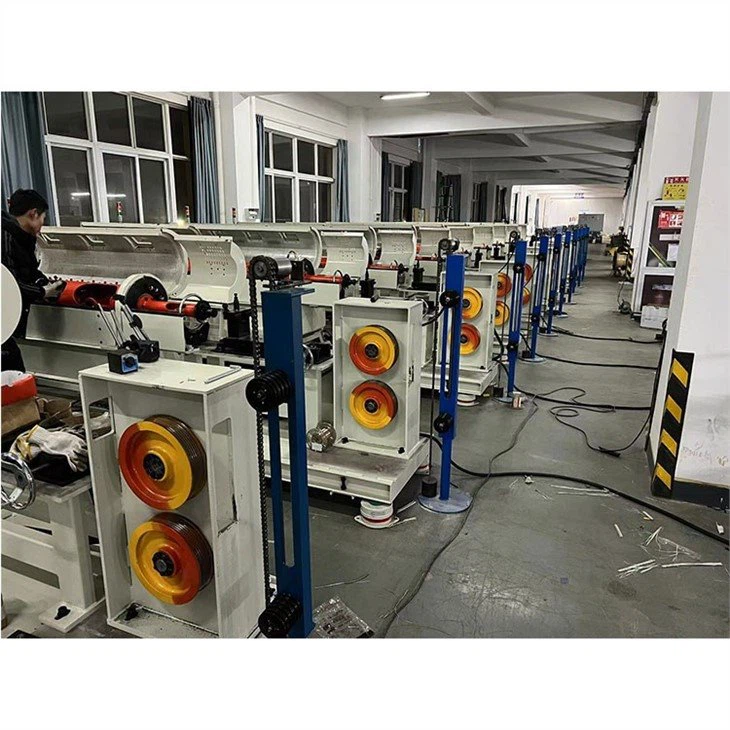
For example, if an operator notices that a particular area of the cable seems to have a different texture or appearance, it could be a sign of uneven tension. The operator can then intervene and make manual adjustments to the tension settings on the machine. This human - machine interaction adds an extra layer of security to ensure that the tension is always under control.
Comparing with Other Machines
If you're considering different stranding machines, you might also be interested in our 100/6 Horizontal Pipe Stranding Machine and 80/12 Horizontal Pipe Stranding Machine. These machines also have their own unique features for handling tension changes, but the 120/3 is specifically designed for certain types of cable production where precise tension control is of utmost importance.
Overall Benefits of Good Tension Control
Proper tension control in the 120/3 Horizontal Pipe Stranding Machine brings a whole bunch of benefits. Firstly, it improves the quality of the cables produced. Cables with consistent tension have better electrical conductivity, mechanical strength, and durability. This means they are less likely to break or malfunction during use.
Secondly, it increases the efficiency of the production process. When the tension is well - controlled, there are fewer strand breaks and less downtime for the machine. This allows for a higher production output in a shorter period of time.
Lastly, it reduces waste. Since the cables produced are of higher quality, there are fewer rejects and less material that needs to be discarded. This is not only good for the environment but also for the bottom line of your business.
Conclusion
In conclusion, the 120/3 Horizontal Pipe Stranding Machine is a remarkable piece of equipment when it comes to handling tension changes during the stranding process. With its advanced tension sensors, automatic tension adjustment, consistent stranding speed, well - designed stranding die, and the option for operator intervention, it ensures that the tension of each strand is kept at the optimal level.
If you're in the market for a high - quality Cable Stranding Machine that can handle tension changes effectively, the 120/3 Horizontal Pipe Stranding Machine is definitely worth considering. We're here to help you with all your stranding needs. If you have any questions or want to discuss a potential purchase, don't hesitate to reach out.
References
- "Principles of Cable Stranding", Industry Handbook on Cable Manufacturing
- "Tension Control in Stranding Processes", Journal of Electrical Cable Technology