


Hey there! As a supplier of the 80/12 Horizontal Pipe Stranding Machine, I often get asked about the differences between horizontal and vertical pipe stranding machines. So, I thought I'd write this blog to break it down for you.
1. Structure and Design
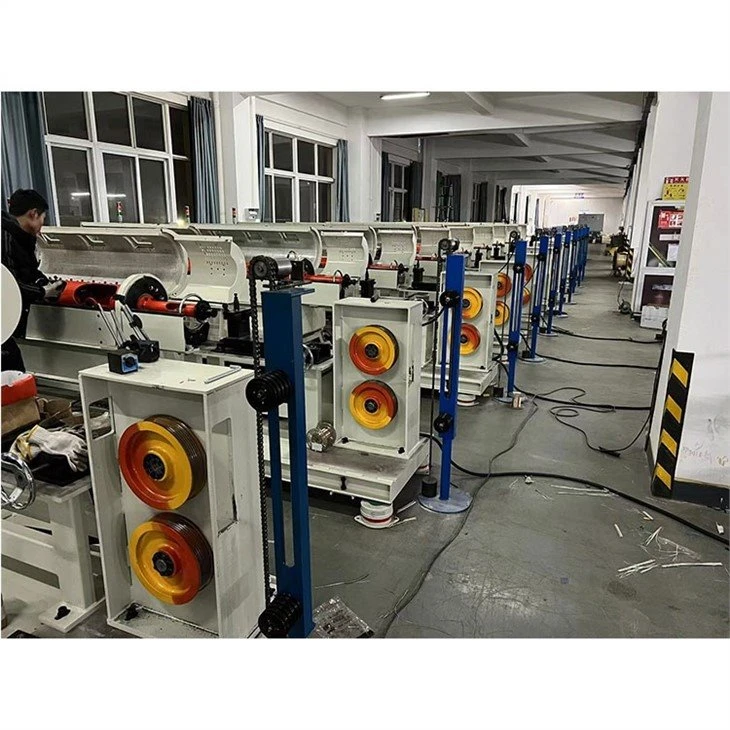
Let's start with the most obvious difference - the structure. The 80/12 Horizontal Pipe Stranding Machine, as the name suggests, has a horizontal layout. The stranding process happens horizontally, which means the wires or cables are fed and twisted in a horizontal plane. This design allows for a more straightforward setup in many industrial environments. It can be easily integrated into existing production lines, especially those with limited vertical space.
On the other hand, vertical pipe stranding machines have a vertical structure. The wires are fed and twisted in a vertical direction. This design is great for applications where space is more available vertically than horizontally. It can also provide a more compact footprint in some cases, as the machine can stack components vertically. However, it might require more height clearance in the production facility.
2. Stranding Capacity and Speed
When it comes to stranding capacity, both types of machines have their own advantages. The 80/12 Horizontal Pipe Stranding Machine is known for its ability to handle a relatively large number of wires. The "80/12" in its name indicates certain specifications related to the stranding capacity. It can efficiently strand multiple wires together, making it suitable for high - volume production.
In terms of speed, horizontal machines like the 80/12 can often achieve high stranding speeds. The horizontal layout allows for a smooth and continuous feed of wires, which can contribute to faster production rates. However, vertical pipe stranding machines can also be quite fast, especially for specific types of cables. They might have different speed profiles depending on the design and the application. Some vertical machines are optimized for high - precision stranding at lower speeds, while others can match the speed of horizontal machines for certain cable types.
3. Ease of Maintenance
Maintenance is an important factor in any industrial machine. The 80/12 Horizontal Pipe Stranding Machine generally offers easier access to its components. Since the machine is laid out horizontally, operators can easily reach different parts of the machine for inspection, cleaning, and repair. This can reduce the downtime required for maintenance.
Vertical pipe stranding machines, on the other hand, might be a bit more challenging to maintain. The vertical structure can make it harder to access some components, especially those located at higher levels. However, modern vertical machines are often designed with maintenance in mind, and they might have features like removable panels and easy - to - reach access points.
4. Product Quality and Precision
Product quality and precision are crucial in cable manufacturing. The 80/12 Horizontal Pipe Stranding Machine can provide excellent precision in stranding. The horizontal layout helps in maintaining a consistent tension on the wires during the stranding process, which can result in a more uniform cable. It can also reduce the risk of wire breakage and ensure a high - quality end product.
Vertical pipe stranding machines can also achieve high precision. The vertical design can sometimes provide better control over the wire tension, especially for certain types of cables. However, the precision can be affected by factors like the alignment of the vertical components and the stability of the machine.
5. Cost
Cost is always a consideration in any manufacturing decision. The 80/12 Horizontal Pipe Stranding Machine might have a different cost profile compared to vertical pipe stranding machines. Generally, horizontal machines can be more cost - effective for large - scale production. They can often produce more cables per unit of time, which can reduce the overall cost per cable.
Vertical machines might have a different cost structure. They can be more expensive to install due to the need for more height clearance and potentially more complex installation procedures. However, for some specialized applications where vertical machines offer unique advantages, the cost might be justified.
Our Product Offerings
As a supplier of the 80/12 Horizontal Pipe Stranding Machine, we also offer other related products. For example, we have the 165/3 Horizontal Pipe Stranding Machine, which has different specifications and is suitable for different applications. We also have a wide range of Stranding Machine options, including the 120/3 Horizontal Pipe Stranding Machine.

6. Application Areas
The 80/12 Horizontal Pipe Stranding Machine is commonly used in various industries. It's ideal for the production of power cables, communication cables, and automotive cables. The high - volume production capabilities and the ability to handle multiple wires make it a popular choice in these industries.
Vertical pipe stranding machines are often used in applications where the cable has a specific shape or where the vertical design offers unique advantages. For example, they are used in the production of some specialty cables, such as those used in aerospace or medical devices.
Conclusion
In conclusion, both the 80/12 Horizontal Pipe Stranding Machine and vertical pipe stranding machines have their own unique features and advantages. The choice between the two depends on various factors, such as the available space in the production facility, the stranding capacity and speed requirements, the product quality and precision needed, and the overall cost.
If you're in the market for a stranding machine and want to learn more about our 80/12 Horizontal Pipe Stranding Machine or other products, don't hesitate to reach out. We're here to help you make the right decision for your business. Contact us for more information and to start a procurement discussion.
References
- Industry reports on cable manufacturing equipment
- Technical specifications of the 80/12 Horizontal Pipe Stranding Machine
- Case studies of horizontal and vertical pipe stranding machine applications