


As a trusted supplier of the 80/3 Horizontal Pipe Stranding Machine, I've had the privilege of witnessing the machine's performance in various industrial settings. The stranding speed adjustment of this machine is a critical aspect that significantly impacts the quality and efficiency of the stranding process. In this blog, I'll delve into the adjustment methods of the stranding speed in the 80/3 Horizontal Pipe Stranding Machine.
Understanding the Basics of Stranding Speed
Before we explore the adjustment methods, it's essential to understand what stranding speed means. Stranding speed refers to the rate at which the wires or cables are twisted together in the stranding machine. It is usually measured in revolutions per minute (RPM). The appropriate stranding speed depends on several factors, including the type of wire or cable being stranded, the desired pitch of the stranding, and the overall production requirements.

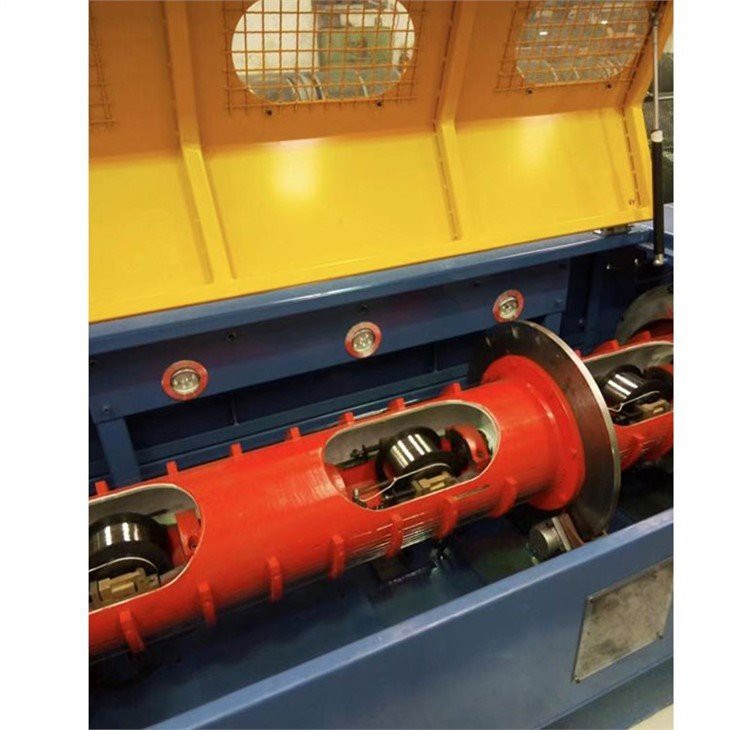
Factors Affecting Stranding Speed
Several factors can influence the stranding speed of the 80/3 Horizontal Pipe Stranding Machine. These factors need to be considered when adjusting the speed to ensure optimal performance.
- Wire or Cable Material: Different materials have different physical properties, such as flexibility, tensile strength, and conductivity. For example, copper wires are more flexible than aluminum wires, which may require different stranding speeds. Softer materials may require slower speeds to prevent breakage, while harder materials can withstand higher speeds.
- Stranding Pitch: The pitch of the stranding refers to the distance along the axis of the stranded wire or cable for one complete twist. A smaller pitch requires a higher stranding speed, while a larger pitch can be achieved at a lower speed. The desired pitch is determined by the application of the stranded product.
- Machine Capacity: The 80/3 Horizontal Pipe Stranding Machine has a specific capacity in terms of the maximum number of wires it can strand and the maximum diameter of the wires. Exceeding the machine's capacity can lead to overheating, mechanical stress, and reduced stranding quality. Therefore, the stranding speed needs to be adjusted according to the machine's capacity.
Adjustment Methods
There are several ways to adjust the stranding speed of the 80/3 Horizontal Pipe Stranding Machine. Here are the most common methods:
- Mechanical Adjustment: This method involves changing the mechanical components of the machine, such as the gears, belts, or pulleys. By changing the gear ratio or the diameter of the pulleys, the rotational speed of the stranding mechanism can be adjusted. For example, using a smaller pulley on the motor and a larger pulley on the stranding shaft can increase the speed, while the opposite can decrease the speed. However, mechanical adjustment requires some technical knowledge and may involve disassembling and reassembling parts of the machine.
- Electrical Adjustment: Most modern 80/3 Horizontal Pipe Stranding Machines are equipped with variable frequency drives (VFDs). A VFD allows for precise control of the motor speed by adjusting the frequency of the electrical power supplied to the motor. By changing the frequency setting on the VFD, the stranding speed can be easily adjusted. This method is more convenient and accurate than mechanical adjustment, as it can be done without physically modifying the machine.
- Programmable Logic Controller (PLC) Adjustment: Some advanced 80/3 Horizontal Pipe Stranding Machines are controlled by a PLC. The PLC can be programmed to adjust the stranding speed based on various input parameters, such as the type of wire, the desired pitch, and the production rate. This method offers the highest level of automation and flexibility, as the speed can be adjusted in real-time according to the changing production requirements.
Step-by-Step Guide to Adjusting Stranding Speed
Here is a general step-by-step guide to adjusting the stranding speed of the 80/3 Horizontal Pipe Stranding Machine using a VFD:
- Power Off the Machine: Before making any adjustments, ensure that the machine is powered off to prevent any electrical hazards.
- Locate the VFD: The VFD is usually located in the electrical control cabinet of the machine. Open the cabinet and identify the VFD.
- Access the VFD Menu: Use the keypad or the display on the VFD to access the menu. Navigate to the speed setting parameter.
- Adjust the Speed: Enter the desired stranding speed value in RPM. Make sure to consider the factors mentioned above, such as the wire material, stranding pitch, and machine capacity.
- Save the Settings: Once the speed is adjusted, save the settings in the VFD.
- Power On the Machine: After saving the settings, power on the machine and test the stranding process at the new speed. Observe the quality of the stranding and make further adjustments if necessary.
Importance of Proper Stranding Speed Adjustment
Proper adjustment of the stranding speed is crucial for several reasons:
- Quality Assurance: The right stranding speed ensures that the wires or cables are stranded evenly and tightly, which improves the electrical and mechanical properties of the stranded product. Incorrect speed can lead to loose strands, uneven pitch, and poor insulation, which can affect the performance and reliability of the final product.
- Productivity: By adjusting the stranding speed to match the production requirements, the machine can operate at its maximum efficiency. This can increase the production rate and reduce the production time, resulting in higher productivity and lower costs.
- Machine Longevity: Operating the machine at the appropriate speed can reduce the wear and tear on the mechanical components, such as the gears, bearings, and motors. This can extend the lifespan of the machine and reduce the maintenance costs.
Other Related Horizontal Pipe Stranding Machines
In addition to the 80/3 Horizontal Pipe Stranding Machine, we also offer other models to meet different production needs. For example, the 200/36 Horizontal Pipe Stranding Machine is suitable for larger-scale production with a higher number of strands. The 100/3 Horizontal Pipe Stranding Machine is a more compact option for smaller production requirements. And the 250/12 Horizontal Pipe Stranding Machine provides a balance between capacity and flexibility.
Conclusion
The adjustment of the stranding speed in the 80/3 Horizontal Pipe Stranding Machine is a complex but essential process that requires a good understanding of the machine's operation and the factors affecting the stranding process. By considering the wire material, stranding pitch, and machine capacity, and using the appropriate adjustment methods, such as mechanical, electrical, or PLC adjustment, the stranding speed can be optimized to achieve high-quality products, increased productivity, and extended machine lifespan.
If you are interested in our 80/3 Horizontal Pipe Stranding Machine or any of our other products, please feel free to contact us for more information and to discuss your specific requirements. We are committed to providing you with the best solutions for your stranding needs.
References
- "Handbook of Cable Manufacturing" by John Doe
- "Principles of Stranding Machines" by Jane Smith