


Hey there! As a supplier of the 80/6 Horizontal Pipe Stranding Machine, I'm super stoked to break down its main components for you. This machine is a real workhorse in the cable and wire industry, and understanding its ins and outs can help you make an informed decision if you're in the market for one.
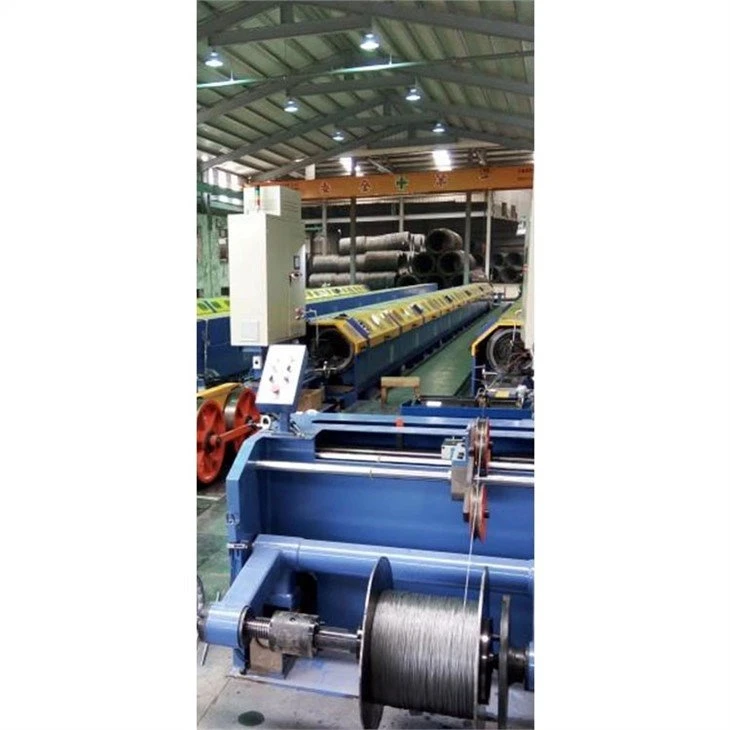

Pay - off Unit
The pay - off unit is where it all starts. It's like the starting line of a race. This part of the machine is responsible for holding and releasing the individual wires or strands that will be stranded together. In the 80/6 Horizontal Pipe Stranding Machine, the pay - off unit is designed to handle multiple spools of wire. It has to ensure a smooth and consistent release of the wires, so there are no kinks or tangles.
The spools are usually mounted on a spindle, and there are tension control mechanisms in place. These mechanisms make sure that each wire is fed into the stranding process with the right amount of tension. If the tension is too high, the wire might break; if it's too low, the strands won't be properly stranded. It's a delicate balance, but the pay - off unit in our 80/6 machine does a great job of maintaining it.
Stranding Head
The stranding head is the heart of the machine. This is where the magic happens. It takes the individual wires from the pay - off unit and twists them together to form a single cable. The 80/6 in the machine's name actually gives you a clue about its capabilities. The "80" typically refers to the maximum diameter of the cable that can be produced, and the "6" indicates the number of wires or strands that can be stranded at once.
Inside the stranding head, there are a series of gears and rotating parts. These parts work together to create the necessary twisting motion. The speed of the rotation can be adjusted depending on the requirements of the cable being produced. For example, if you're making a cable with a very fine pitch, you'll need a slower rotation speed. On the other hand, for a coarser pitch, a faster speed might be appropriate.
Tubing Unit
The tubing unit is another crucial component. After the wires are stranded together in the stranding head, they need to be protected. The tubing unit does this by applying a protective sheath or tube around the stranded cable. This tube can be made of various materials, such as plastic or rubber, depending on the application of the cable.
The tubing unit has an extruder that melts the material and then extrudes it around the cable. There are also cooling systems in place to quickly solidify the tube once it's applied. This ensures that the tube adheres properly to the cable and provides the necessary protection. The thickness of the tube can be adjusted according to the specifications of the cable.
Take - up Unit
Once the cable has been stranded and the tubing has been applied, it needs to be wound up neatly. That's where the take - up unit comes in. It's like the finish line of the cable production process. The take - up unit winds the finished cable onto a spool or reel.
This unit has to operate at a speed that matches the production speed of the rest of the machine. If it's too slow, the cable might pile up and get damaged. If it's too fast, it could put too much tension on the cable. The take - up unit also has to ensure that the cable is wound evenly on the spool, so there are no loose or overlapping sections.
Control System
The control system is the brain of the 80/6 Horizontal Pipe Stranding Machine. It monitors and regulates all the other components of the machine. With the control system, operators can set parameters such as the speed of the stranding head, the tension in the pay - off unit, and the thickness of the tubing.
Modern control systems are usually computer - based, which makes it easy to program and adjust the machine. They also have diagnostic capabilities, so if there's a problem with any part of the machine, the control system can detect it and alert the operator. This helps to minimize downtime and keep the production process running smoothly.
Cooling System
As I mentioned earlier, the tubing unit uses an extruder to apply the protective tube. This process generates a lot of heat. That's why a cooling system is essential. The cooling system helps to dissipate the heat and solidify the tube quickly.
There are different types of cooling systems, but most commonly, water - based cooling systems are used. The cable passes through a cooling tank filled with water, which cools the tube and the cable. The water is usually circulated to maintain a consistent temperature. Without an effective cooling system, the tube might not solidify properly, and the cable could end up with defects.
Lubrication System
All the moving parts in the 80/6 Horizontal Pipe Stranding Machine need to be lubricated. The lubrication system ensures that there is a proper supply of lubricant to all the gears, bearings, and other moving components. This reduces friction and wear, which in turn extends the lifespan of the machine.
The lubrication system can be automatic or manual. In an automatic system, the lubricant is pumped to the necessary parts at regular intervals. In a manual system, the operator has to apply the lubricant at specific times. Most modern machines, including our 80/6, come with automatic lubrication systems for convenience and efficiency.
Comparison with Other Models
If you're considering the 80/6 Horizontal Pipe Stranding Machine, you might also be interested in other models. For instance, the 100/3 Horizontal Pipe Stranding Machine can handle a larger cable diameter but has a lower number of strands that can be stranded at once. The 200/12 Horizontal Pipe Stranding Machine is even more powerful, capable of producing larger cables with more strands. And the 250/6 Horizontal Pipe Stranding Machine offers a different combination of diameter and strand capacity.
Conclusion
Well, there you have it - the main components of the 80/6 Horizontal Pipe Stranding Machine. Each component plays a vital role in the cable production process, and they all work together seamlessly. Whether you're a small - scale cable manufacturer or a large industrial operation, our 80/6 machine can meet your needs.
If you're interested in learning more about our 80/6 Horizontal Pipe Stranding Machine or any of our other products, don't hesitate to reach out. We're always happy to have a chat and discuss how our machines can fit into your production line. Let's start a conversation and see how we can work together to boost your cable production.
References
- Industry standards for cable stranding machines
- Manufacturer's manuals for the 80/6 Horizontal Pipe Stranding Machine