


Stranding is a crucial process in manufacturing various products, and the 200/3 Horizontal Pipe Stranding Machine plays a significant role in this field. As a reputable supplier of the 200/3 Horizontal Pipe Stranding Machine, understanding how to measure the stranding quality of the products it manufactures is essential for both us and our customers. In this blog post, we will delve into the key aspects and methods to assess the stranding quality of products made by the 200/3 Horizontal Pipe Stranding Machine.
Understanding the 200/3 Horizontal Pipe Stranding Machine
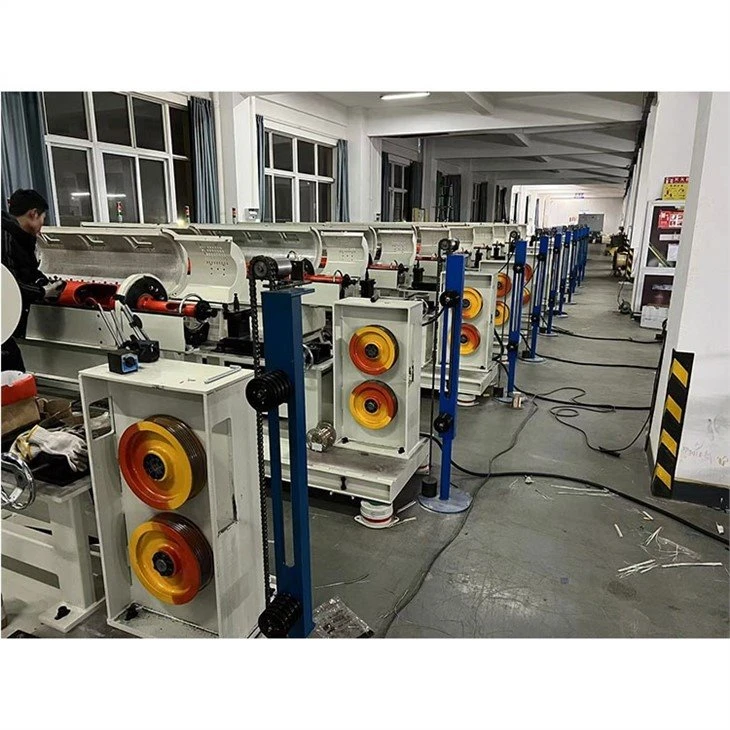
Before we discuss the measurement of stranding quality, it is important to have a clear understanding of the 200/3 Horizontal Pipe Stranding Machine. This machine is designed to strand multiple wires or cables together in a horizontal configuration. The "200/3" in its name typically indicates certain specifications of the machine, such as the diameter capacity or the number of strands it can handle simultaneously.
This type of stranding machine offers several advantages, including high precision, stable performance, and the ability to produce a wide range of products. It is widely used in industries such as the electrical, telecommunications, and automotive sectors, where high - quality stranded products are required.
Key Factors Affecting Stranding Quality
When it comes to the stranding quality of products made by the 200/3 Horizontal Pipe Stranding Machine, several factors come into play.
1. Strand Pitch Consistency
The strand pitch is the distance between consecutive twists in the stranded product. Maintaining a consistent strand pitch is crucial for the overall performance of the stranded product. Inconsistent pitch can lead to uneven stress distribution, which may affect the mechanical and electrical properties of the product. For example, in electrical cables, an inconsistent strand pitch can cause variations in the impedance and capacitance, leading to signal distortion.
To measure the strand pitch, a simple method is to use a measuring tape or a caliper. Select a representative length of the stranded product, count the number of twists within that length, and then calculate the average strand pitch. A high - quality stranding should have a strand pitch variation within a very narrow range, typically less than ± 1% of the specified pitch.
2. Tension Uniformity
Tension uniformity during the stranding process is another critical factor. If the tension applied to each individual wire or cable being stranded is not uniform, it can result in loose or tight strands, which may cause the product to have an irregular shape or even break during use. For instance, in a stranded wire rope, non - uniform tension can lead to some strands carrying more load than others, increasing the risk of premature failure.
To measure tension, specialized tension meters can be used. These meters are usually installed at the entrance of the stranding zone to monitor the tension of each strand in real - time. The tension variation between different strands should be minimized, and typically, it is recommended to keep the tension variation within ± 5% of the target tension.
3. Strand Helix Angle
The helix angle of the strands in the stranded product also affects its quality. The helix angle determines the flexibility and strength of the product. A proper helix angle ensures that the strands are evenly distributed around the core, maximizing the efficiency of the stranding process.
The helix angle can be measured using a protractor or a specialized angle - measuring device. For most applications, the helix angle should be within a specific range depending on the type of product. For example, in power cables, a helix angle of around 15° - 25° is commonly used to achieve a good balance between flexibility and mechanical strength.
4. Surface Quality
The surface quality of the stranded product is also an important aspect of stranding quality. A smooth surface not only gives the product a good appearance but also reduces the risk of abrasion and corrosion. Surface defects such as scratches, burrs, or adhering foreign particles can have a negative impact on the performance of the product.
Visual inspection is the most common method to assess the surface quality. Inspectors can use magnifying glasses or microscopes to detect tiny surface defects. In addition, surface roughness measuring instruments can be used to quantify the smoothness of the surface. The surface roughness of high - quality stranded products should be within a specified range, typically measured in micrometers.

Advanced Measurement Techniques
In addition to the basic measurement methods mentioned above, there are some advanced techniques that can be used to measure the stranding quality of products made by the 200/3 Horizontal Pipe Stranding Machine.
1. X - ray Inspection
X - ray inspection can provide a non - destructive way to examine the internal structure of the stranded product. It can detect hidden defects such as misaligned strands, voids, or foreign objects inside the product. X - ray machines are equipped with special sensors that can capture images of the internal structure of the product, allowing operators to identify potential quality issues.
2. Ultrasonic Testing
Ultrasonic testing is another non - destructive testing method that can be used to detect internal defects in the stranded product. Ultrasonic waves are sent into the product, and any reflections or changes in the wave pattern indicate the presence of defects such as cracks or internal discontinuities. This method is particularly useful for detecting defects that are not visible from the surface.
Comparing with Other Stranding Machines
It is also interesting to compare the stranding quality of products made by the 200/3 Horizontal Pipe Stranding Machine with those made by other types of stranding machines, such as the 80/6 Horizontal Pipe Stranding Machine and the Double Twist Stranding Machine.
The 200/3 Horizontal Pipe Stranding Machine is capable of handling larger - diameter wires and cables compared to the 80/6 Horizontal Pipe Stranding Machine. This means that it can produce heavier - duty stranded products with better mechanical properties. However, the 80/6 machine may be more suitable for applications where high - precision and small - diameter products are required.
The Double Twist Stranding Machine, on the other hand, can achieve a higher stranding speed and more compact strand structure. But the 200/3 Horizontal Pipe Stranding Machine offers more flexibility in terms of strand configuration and can be easily adjusted to produce different types of products.
Conclusion and Call to Action
Measuring the stranding quality of products made by the 200/3 Horizontal Pipe Stranding Machine is a multi - faceted process that involves evaluating various factors such as strand pitch consistency, tension uniformity, helix angle, and surface quality. By using a combination of basic and advanced measurement techniques, manufacturers can ensure that the products they produce meet the highest quality standards.
As a leading supplier of the 200/3 Horizontal Pipe Stranding Machine, we are committed to providing our customers with high - quality machines and comprehensive technical support. If you are interested in purchasing our Stranding Machine or want to learn more about stranding quality measurement, please feel free to contact us for further discussion and negotiation.
References
- [1] Manufacturing Technology Handbook for Stranded Products
- [2] Quality Control Standards for Electrical Cables and Wires
- [3] Research on Stranding Process Optimization in the Cable Industry