


Hey there! As a supplier of wire stranding machines, I often get asked about how to adjust the straightening effect of the wire straightening device in a wire stranding machine. It's a crucial aspect because a good straightening effect can significantly improve the quality of the stranded wire. So, let's dive right into it.
Understanding the Basics of Wire Straightening in a Stranding Machine
First off, you gotta know that the wire straightening device in a wire stranding machine plays a key role in making sure the wire is straight before it gets stranded. If the wire isn't straight, the final stranded product might have issues like uneven tension, kinks, or poor overall quality.
The wire straightening process usually involves passing the wire through a series of rollers or guides. These components apply pressure to the wire, bending it back and forth to remove any bends or curves. The degree of pressure and the arrangement of these rollers or guides are what determine the straightening effect.
Factors Affecting the Straightening Effect
There are several factors that can influence how well the wire straightening device works. Let's take a look at some of the most important ones.
Wire Material and Diameter
Different wire materials have different properties, like hardness and elasticity. For example, copper wire is more flexible than steel wire, so it might require a different straightening setting. Also, the diameter of the wire matters. Thicker wires usually need more pressure to straighten compared to thinner ones.
Roller or Guide Alignment
If the rollers or guides in the straightening device aren't aligned properly, the wire won't be straightened evenly. This can lead to parts of the wire being over - straightened while others remain bent. So, making sure everything is in line is super important.
Speed of the Stranding Machine
The speed at which the wire is fed through the stranding machine can also affect the straightening effect. If the speed is too high, the straightening device might not have enough time to work effectively on the wire. On the other hand, if the speed is too low, it can reduce the overall productivity of the machine.
How to Adjust the Straightening Effect
Step 1: Check the Roller or Guide Pressure
The first thing you should do is check the pressure applied by the rollers or guides on the wire. Most straightening devices allow you to adjust this pressure. You can usually do this by turning a screw or using a hydraulic or pneumatic system.
Start by setting the pressure at a relatively low level. Then, run a short length of wire through the straightening device and the stranding machine. Check the straightness of the wire at the output. If the wire is still bent, gradually increase the pressure and test again until you get the desired straightening effect.
Step 2: Adjust the Roller or Guide Alignment
To ensure proper alignment, you need to use a straightedge or a laser alignment tool. Place the straightedge or align the laser along the path of the wire through the straightening device. Check if the rollers or guides are parallel to the straightedge or the laser beam.
If you find any misalignment, loosen the mounting bolts of the rollers or guides and adjust their position. Once you've made the necessary adjustments, tighten the bolts and re - check the alignment.
Step 3: Optimize the Machine Speed
As mentioned earlier, the speed of the stranding machine can impact the straightening effect. You need to find the right balance between speed and straightening quality.
Start by running the machine at a slow speed and observe the straightness of the wire. If the straightening is good, gradually increase the speed in small increments. Keep an eye on the wire quality at each speed setting. If you notice any deterioration in the straightening effect, reduce the speed slightly.

Troubleshooting Common Straightening Issues
Wire Still Bent After Adjustment
If the wire is still bent even after adjusting the pressure, alignment, and speed, there could be other issues. It's possible that the wire has some internal stress or damage. In this case, you might need to use a pre - straightening process or check the source of the wire for any manufacturing defects.
Uneven Straightening
Uneven straightening can be caused by uneven roller or guide wear. Check the condition of the rollers or guides regularly. If you notice any signs of wear, replace them as soon as possible.
Our Wire Stranding Machines and Straightening Capabilities
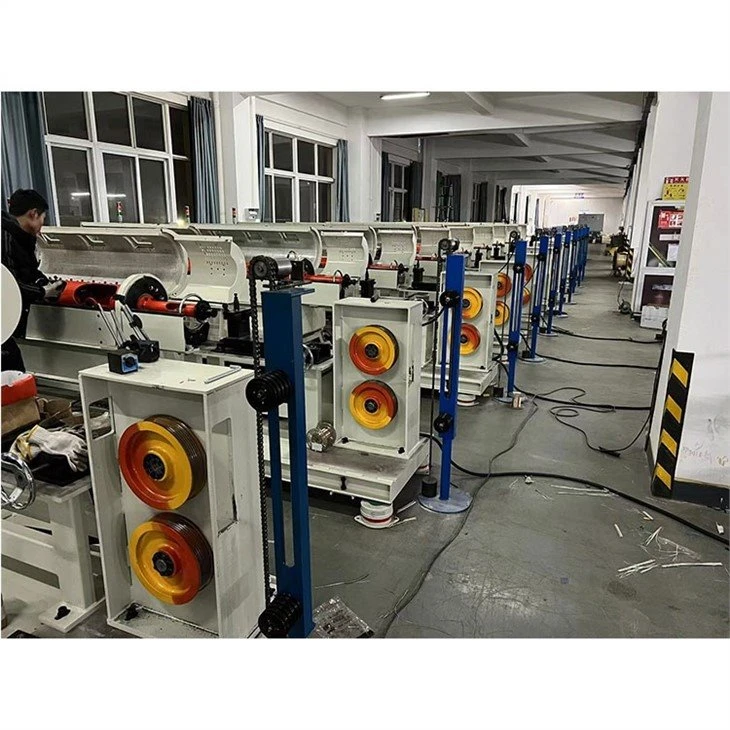
At our company, we offer a range of high - quality wire stranding machines, including the 165/18 Horizontal Pipe Stranding Machine, 120/3 Horizontal Pipe Stranding Machine, and 200/18 Horizontal Pipe Stranding Machine. These machines are designed with advanced straightening devices that can be easily adjusted to meet your specific needs.
Our straightening devices are built with precision - engineered rollers and guides that ensure accurate and consistent straightening. They also come with user - friendly adjustment mechanisms, making it easy for you to fine - tune the straightening effect according to the wire material and diameter.
Contact Us for More Information
If you're in the market for a wire stranding machine or need more advice on adjusting the straightening effect, don't hesitate to get in touch with us. We're here to help you get the best performance out of your wire stranding operations. Whether you're a small - scale manufacturer or a large - scale industrial facility, we have the right solution for you.
References
- "Handbook of Wire Rope Engineering"
- "Principles of Wire Stranding Technology"