


Hey there! As a supplier of Double Twist Stranding Machines, I often get asked if these machines can be used for high - voltage wire production. Well, let's dig into this topic and find out.
First off, what's a Double Twist Stranding Machine? It's a pretty nifty piece of equipment. This machine is designed to twist multiple wires together to form a single cable. The "double twist" part comes from the fact that it twists the wires in two different directions, which gives the final cable a more stable and uniform structure.
Now, high - voltage wires are a whole different ballgame. They need to meet some really strict requirements. High - voltage wires carry large amounts of electrical energy over long distances. So, they have to be able to withstand high electrical stresses, mechanical stresses, and environmental factors like temperature changes, humidity, and even UV radiation.

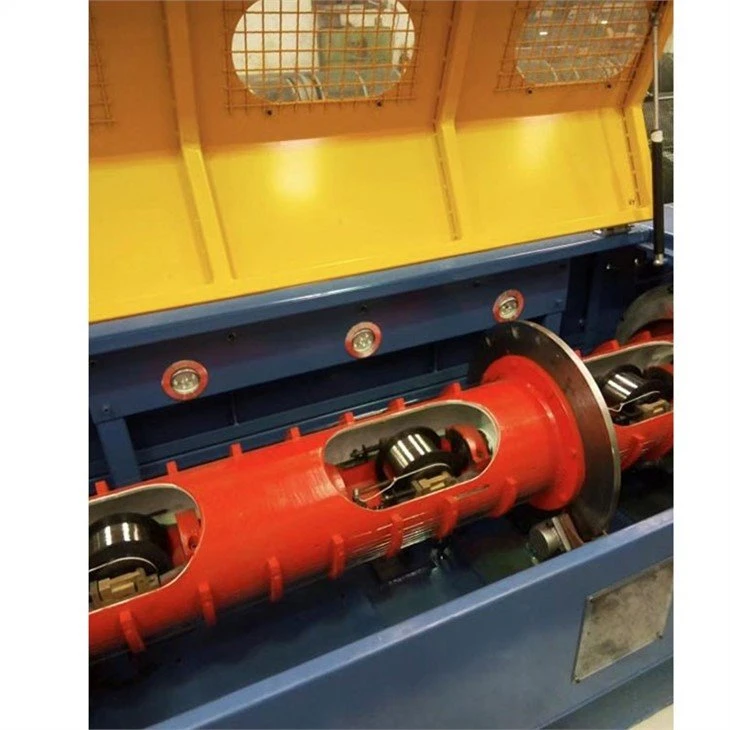
Let's talk about the features of a Double Twist Stranding Machine and see how they stack up against the needs of high - voltage wire production.
1. Precision Twisting
One of the key requirements for high - voltage wires is a precise and uniform twist. A Double Twist Stranding Machine excels in this area. It can twist wires with a high degree of accuracy, ensuring that the pitch of the twist is consistent throughout the cable. This is super important because an uneven twist can lead to uneven distribution of electrical current, which can cause hotspots and reduce the overall performance and lifespan of the high - voltage wire.
2. High - Speed Production
High - voltage wire production often requires large quantities to be produced in a short time. Double Twist Stranding Machines are known for their high - speed operation. They can twist wires at a much faster rate compared to some other stranding methods. This means that they can keep up with the high - volume demands of high - voltage wire manufacturing.
3. Compatibility with Different Wire Materials
High - voltage wires can be made from various materials such as copper, aluminum, or alloys. Double Twist Stranding Machines are versatile and can handle different types of wires. Whether you're working with soft copper wires or more rigid aluminum ones, the machine can adjust its operation to ensure a proper twist.
4. Tension Control
Maintaining the right tension in the wires during the stranding process is crucial for high - voltage wire production. Double Twist Stranding Machines come with advanced tension control systems. These systems can keep the tension of each wire constant, preventing issues like wire breakage or loose strands. This is essential for ensuring the mechanical integrity of the high - voltage wire.
However, it's not all sunshine and rainbows. There are also some considerations when using a Double Twist Stranding Machine for high - voltage wire production.
1. Insulation Considerations
High - voltage wires require special insulation to prevent electrical leakage. While the Double Twist Stranding Machine focuses on the stranding of the conductors, the insulation process needs to be carefully coordinated. After the wires are stranded, they need to be properly insulated. Some Double Twist Stranding Machines can be integrated with insulation equipment, but this requires additional setup and calibration.
2. Quality Assurance
High - voltage wire production has very strict quality standards. The Double Twist Stranding Machine needs to be regularly maintained and calibrated to ensure that it continues to produce high - quality stranded wires. Any deviation in the twisting process can lead to defective high - voltage wires. So, a comprehensive quality control system is a must.
3. Customization
High - voltage wires can have different specifications depending on their application. Some may require a specific number of strands, different wire diameters, or unique twist patterns. Double Twist Stranding Machines can often be customized to meet these specific requirements. For example, if you need a high - voltage wire with a larger number of strands, the machine can be adjusted accordingly.
Now, let me introduce some of our specific Double Twist Stranding Machines that could be suitable for high - voltage wire production.
We have the 200/12 Horizontal Pipe Stranding Machine. This machine is designed for medium - to high - volume production. It offers excellent precision and can handle a wide range of wire diameters. The horizontal pipe design allows for smooth wire feeding and stranding, making it a great choice for high - voltage wire manufacturing.
Another option is the 80/12 Horizontal Pipe Stranding Machine. This machine is more compact and is suitable for smaller - scale high - voltage wire production or for testing and prototyping. It still offers the same high - quality twisting capabilities as our larger machines.
If you need even higher production capacity, our 200/18 Horizontal Pipe Stranding Machine is a great choice. It can handle 18 wires at a time, allowing for faster production of high - voltage cables with a larger number of strands.
Conclusion
So, can a Double Twist Stranding Machine be used for high - voltage wire production? The answer is a resounding yes. With its precision twisting, high - speed operation, compatibility with different wire materials, and the ability to be customized, it is well - suited for the task. However, it's important to consider the insulation process, quality assurance, and specific requirements of each high - voltage wire project.
If you're in the high - voltage wire manufacturing business and are looking for a reliable stranding solution, I encourage you to reach out to us. We can provide you with more detailed information about our Double Twist Stranding Machines, offer technical support, and even help you with customizing the machine to meet your exact needs. Let's start a conversation and see how we can work together to produce high - quality high - voltage wires.
References
- Electrical Power Cable Engineering, Third Edition by John W. McMahon
- Handbook of Electric Power Calculations, Fourth Edition by Hadi Saadat